Blessed Anticipation

“For unto you a child is born, unto us a Son is given…”

                                                                                                -Isaiah 9:6a

Reid Walters

Christmas is a season that is steeped in anticipation: the anticipation of seeing loved ones, the anticipation of giving and receiving gifts and, most importantly, the anticipation of celebrating the birth of the Messiah. However, the anticipation of a coming savior is one that has long preceded the season of Advent as we know it. The tribe of Judah, who Isaiah was addressing in chapter nine, were also anticipating the coming of the Messiah but in a way we can scarcely understand. Judah at the time was torn between warring nations, Israel and Syria to the immediate North and the reigning Assyrian empire which encompassed all three nations. The king of Judah, Ahaz, was afraid to challenge the mighty Assyrian empire and so he sent word to the king of Assyria, warning him of the coming uprising in hopes of receiving protection from the retribution of Israel and Syria. This was a bleak time for Judah, whose dread was only compounded by the repeated prophesies given by Isaiah foretelling the coming destruction and suffering of God’s people. However, amongst all the turmoil, Isaiah offers the prophecy we see in chapter nine verse six: “For unto us a child is born, unto us a son is given, and the government shall be upon his shoulders and his name shall be called Wonderful, Counselor, The mighty God, The everlasting Father, The Prince of Peace.” These words filled the people of Judah with hope and anticipation. They now know that despite their present suffering God will be sending a blessed child, who will redeem His people and deliver them from suffering and exile.

While the Jews of ancient Judah were expecting a mighty warrior and commanding ruler to come as their Messiah, certainly not a helpless child, there remains much we can glean from their anticipation of His coming. The people of Judah felt lost and abandoned in their present circumstances. They were afraid of what the future would hold for them and whether God would ultimately redeem and restore them as He promised He would. Correspondingly, the time in which we currently live is uncertain and adverse to say the least. However, in uncertain times anticipation can play a powerful role in our lives, just as it did in the lives of the Judeans. Anticipation calls us forward, to things yet unseen. It calls us to depart, even if it be momentarily, from our present circumstances and live in a way that is characterized by a blissful expectation of what is to come. This is one of the most remarkable beauties of the Advent season: taking the standing opportunity to pause and look upon Jesus with anticipation, excitement, and joy. While we may not know precisely what the future holds, we can, as the people of Judah once did, turn to the words of Isaiah and be filled with blessed anticipation for the coming of our savior in this season of Advent.  

Reid Walters graduated from Morning Star Academy in 2017 and now is a senior at Olivet Nazarene University. Reid majors in philosophy with minors in biology and chemistry with the hope of going to medical school after graduation. Outside of school Reid is an avid reader, rock climber, and photographer.

“On Faith”

David McIntosh

“Mary, have you even started to think about what you need to take?” Joseph might have asked, hesitantly. If the Christmas account were taking place in real time in our western culture, now would be the time to be asking these types of questions. Consider and imagine how a woman who is in the last days of full term pregnancy might respond – not forgetting she’s facing a journey of over 80 miles without reclining seats and air conditioning. Anyone glad that the angel didn’t visit your house with the same proclamation given to the Virgin?

Tradition and history tell us that Mary was a moral young woman when the unexpected visitor to her house brought the unbelievable and miraculous news that Mary was with Child (Luke 1:26-38). After the expected question of “How…” (v. 34) the attention turns toward her announcement to her Aunt Elizabeth, who was also expecting a baby known as John the Baptist. There’s much joy and celebration shared between these two expectant mothers as they journey through pregnancy together.

Have you ever stopped to ponder what Mary did during the hard days? A young unmarried woman in the family way wasn’t condoned or celebrated. Her soon-to-be husband contemplated divorcing her (Matthew 1:19) to protect his good name. It wasn’t Mary’s words of pleading that changed his mind (Matthew 1:20). And imagine the laughs and chuckles when she insisted an angel had appeared and told her this was all designed by God to bring Hope to the world. Mary’s pregnancy wasn’t filled with baby showers and shopping for nursery decor. It seems there were times when Mary had to keep faith in what she knew.

There are a lot of moving parts in the first twenty verses of Luke 2. A verse that has caused me some wonder and meditation is verse nineteen. What was Mary keeping and pondering? “All these things” (Luke 1:19). Is it a stretch to agree that Mary would’ve been replaying all that God had done in the last ten months and now it has come to pass? Mary keeps her faith by reminding herself of God’s promises and provision.

But what about us? We’re receiving an invitation, too. We can use this Advent to help bolster and increase our faith. To say that 2020 wasn’t the year we hoped for is a colossal understatement. But we can’t let the uncomfortable nature of the times change how we view God. We’d do well to remind ourselves of God’s Power and Sovereignty. “Did it ever occur to you that nothing ever occurs to God?” asked the old southern preacher A. Rogers. When life gets extremely complicated, we can take time to ponder what God has done and accomplished. Gather family around the tree this year and reminisce. Tough times can be fertile soil for a growing faith if we remain focused on what God has done on our behalf.

David McIntosh met his college sweetheart during their freshman year and after graduation, Dave and Susie married and began working in the wholesale supply industry. They also welcomed Will and Lauren into their family. During 2004, God called Dave and his family to the ministry. Pastor Dave and family moved to Muscatine in February 2012 to serve at Hillcrest.He comes to Muscatine via a great church in rural Jones County Iowa. Dave is a board member at Morning Star Academy.

Arriving at Our Origins

Joanie Mercy

Etymology, or “the origin of words” is a natural study for a student of ancient languages.  Latin is especially fitting to study since it is a root language of our modern English.  Many words we use every day are actually Latin words.  Many more are derived from Latin ones.  Looking at the origin of words is not only interesting, but uncovers layers of meaning and builds connections between us and our own origins.

The season of Advent has its own ancient past, not just in ceremony but in the word itself.  Observance of Advent in the Church started in France in the 5th century.   However, the term “advent” came into popular use in Germany in the early 1800’s.  Advent calendars were printed to aid in the count down to Christmas. 

The word “advent” comes from a Latin root word that was used long before the birth of Christ.  “Advent” as a noun comes from the Latin “adventus” meaning “arrival.”  As a verb, it is derived from “advenio” meaning “come to.”  “Advenio,” in fact, is two Latin words in one.  “Ad” is the preposition “to” and “venio” is simply “come.”  Another root of the same word can be found in the Latin Christmas carol “Veni, veni, Emmanuel” (O Come, O Come, Emmanuel). 

Other English words that come from the advent word family can help give richer meaning to this season.   How do these words and their definitions enhance the meaning of Advent and the Christmas season for you?

Advance –       v. to move forward in a purposeful way

                        n. a development or improvement

                        adj.  done, sent or supplied beforehand

Adventure –    n. an unusual and exciting experience or activity

Advantage –    n.  the opportunity to gain something

When I sat in deep thought over these words, the aptness of the word “advent” for this time in the Christian church calendar rang true.  The birth of Christ was no coincidence, but a purposeful gift to the world, a Redeemer, a Savior, that was planned “beforehand” for our salvation.  And, what more unusual (I would actually say “unique”) and exciting event than that of his coming?

Synonyms for “advent” are equally revealing. 

Approach –      v. coming nearer from a distance 

Emergence –   n. coming into view after being revealed (Christ’s coming had been revealed in the Old Testament through God’s word and prophecies.)

Also, I found this synonym surprising, and probably the most edifying of all:

 Origin –           n.  a beginning

Since Jesus Christ is the Son of God, He being our origin is not surprising, but the idea that His arrival is one and the same with our origins set me deeper into reflective thought.  But, back to the etymology, the “origin” of the word, “Advent.”

Merriam-Webster gives one more definition for “advent.”

Advent –          n.  a coming into being or use (in other words, an origin)

Imagine that.

Joanie Mercy and her husband, Frank Drew, are both musicians. Their daughter Angelique is in 7th grade at Morning Star Academy. Mrs. Mercy graduated form Augustana College, attended University of Iowa College of Music, and formerly performed in regional orchestras including the Quad-City Symphony, Knox-Galesburg Symphony, Muscatine Symphony Orchestra and the Milwaukee Chamber Orchestra. Mrs. Mercy teaches K-6 Latin and K-8 Music at Morning Star Academy and also conducts the MSA String Ensemble. She currently has 15 private students.

Pausing for Poetry in Luke’s Gospel

Rembrandt “Simeon’s Song of Praise”

Anna Carrington

One of my favorite distance learning opportunities in 2020 is a disruptive practice I call “pause for poetry.” My sons really enjoy this seemingly random occurrence; it means a break from worksheets, and the alliterative repetition of “p” makes it fun to announce.

“Pause for poetry” is simple: we just take a few minutes to read a poem. Both of my sons tend to be analytical and linear, and poetry doesn’t follow patterns they would expect or choose. But they have solid reference points: participating in liturgy at church and reciting poetry at Morning Star have both helped them experience poetry in community.

As we step into the light of Advent, I wonder how we might “pause for poetry” as we encounter the story of Jesus’ birth in the Gospel of Luke. When telling the story to children, we often skim along familiar plot points like the terrified shepherds and the smelly stable. The people in the story matter of course—but so do the things they proclaim. The praise of Mary, the prophecy of Zechariah, and the prayer of Simeon all reflect God’s promises to his people.

With John the Baptist’s arrival, God ends 400 years of silence (a pause!) to fulfill the words of Malachi: “Behold, I send my messenger, and he will prepare the way before me.” Mary, Zechariah, and Simeon all recognize God’s faithfulness, and they respond in faith, recalling the Old Testament poetry in which they were steeped. This included the Psalms, the Song of Moses (Exodus 15), and the words of Isaiah.

Take Zechariah’s prophecy: Filled with the Holy Spirit after months of being mute, Zechariah proclaims a rich tapestry of Old Testament promises—and how Jesus fulfills them. His words link us to God’s Big Story and to the generations that came before. Suddenly we see why the manger is the moment, the cross the hinge, the resurrection the beginning.

How can we consider—and cling to—these weighty words in Luke 1 and 2? Here are a few ideas: Pick one of these three poem-prayers to read aloud each week leading up to Christmas. Reflect on it with your family, and dig deeper into the Old Testament verses it references. Stage your own Christmas pageant in the den, with your older children reading the longer verses. Listen to one of the innumerable settings of Mary’s song of praise, the Magnificat. Pray Simeon’s prayer with your younger ones as you turn on nightlights. Pray that Emmanuel, God with us, will come light our hearts.

I Hit a Wall

Kendra Thompson

We’ve found ourselves still living in the midst of a global pandemic. Death tolls rise and restrictions remain. And yet, God, too, is steadfast. What is God revealing to you so you know He is Trustworthy, Beautiful, and Good?

Yesterday, to use a phrase I’ve been hearing more and more lately, I hit a wall. I was clearing plates from the table not long after dinner and I just had to stop. I had to sit down, then lie down. I had to desist from all activity for a few minutes – and then for a few minutes more. Looming, though not heavily, was the prompt for this blog theme. At first, I saw these two things in contrast. But now I see that my predicament yesterday was an answer to the question. How do I know God is trustworthy, beautiful, and good? Because yesterday, I hit a wall.

Yesterday, I hit a wall and I just had to rest a minute. I couldn’t tick one more thing off my to do list I couldn’t fold one more pair of socks, nor could I bag up one more pile of fallen pine needles. I hit a wall and I needed to sit down.

In many ways, my reflection is just an echo of what the other bloggers have said. There is so much that is outside of our control and in those moments when we smack squarely into our lack (like a wall) we are reminded of the 2nd Corinthians passage about Paul’s “thorn in the flesh.” In chapter 12, Paul writes,

Three times I pleaded with the Lord to take it away from me. But he said to me, “My grace is sufficient for you, for my power is made perfect in weakness.” Therefore I will boast all the more gladly about my weaknesses, so that Christ’s power may rest on me. 10 That is why, for Christ’s sake, I delight in weaknesses, in insults, in hardships, in persecutions, in difficulties. For when I am weak, then I am strong.

How do I know that God is good? Because through moments of limitation and restriction, I am reminded that I’m not in charge of the universe, I’m not in control. Universe set aside, I can’t even control – or schedule – my next fit of exhaustion! But rest comes, grace comes, and God reigns. It doesn’t mean I’m always so quick to grasp this, but God’s mercy comes into focus more clearly when I face my own powerlessness and fatigue.

This is where the Christian life contrasts with the way of the world. There are millions of products and just as many “life hacks” to convince us we need not skip a beat; we can be healthy, organized, centered and successful at all times. These products and promises, though seemingly benign, stand in contrast with the truth of the gospel. And what is that? That we’re not fine, we don’t “got this,” and it might be time to sit out a round. And sometimes (like me, yesterday) we don’t acknowledge this truth, though we know it deep down in our heart, until we hit a wall.

So today, after a good night’s rest, and a dose of humility, I thank God for the wall. And perhaps even more, I thank Him for his sufficiency and grace.

Kendra Thompson is a children’s minister, a writer, a Morning Star parent and part-time director of communications for the school. She and her husband, John, love that their kids’ faith is incorporated into their learning at Morning Star Academy.

Shadows and Light

We’ve found ourselves still living in the midst of a global pandemic. Death tolls rise and restrictions remain. And yet, God, too, is steadfast. What is God revealing to you so you know he is Trustworthy, Beautiful, and Good? 

Joel Rohde

Almost two years after being diagnosed with Alzheimer’s, my grandfather was put into a care facility.  Some call the disease “The Long Goodbye” and anyone who has lived with someone who suffers from it knows the brutality that accompanies the sickness.  Not only does Alzheimer’s wreak havoc on the brain, but it causes daily heartbreak to those around the patient.  Though you understand that the person you love has a disease there is little that can soften the blow of a loved one suddenly not able to recognize who you are.

Placing my grandpa in a care facility was a painful decision for my grandmother.  She had taken care of grandpa for as long as she had known him.  They had come through wars together.  They had faced trials of all kinds together.  Now she was being forced to admit that she had met her match in Alzheimer’s.  She had fought long and hard but there was nothing more that could be done.  He needed care she couldn’t give him so there he sat on the other side of a window.  Due to COVID-19 she wasn’t even allowed to be with him.

His health rapidly declined.  He didn’t understand why he had been separated from the only person he still recognized.  Grandma could only watch through a pane of glass as he retreated deeper into his disease.

Shortly after taking up his new residence I found myself sitting in my grandparents’ living-room across from grandma.  She would talk in waves.  One moment she would be recalling memories of our different family gatherings.  The next we’d be sitting together silently.  In one of these beats of rest, as I listened to the clock steadily remind us of what we were up against, I realized that I probably have never sat alone with my grandma before.  I come from a huge family and there was always a brother accompanying me.  At the very least, grandpa would be around.  Now it was just the two of us.

Then my grandma said, “You know, the Bible says that you should rejoice always and be thankful in all circumstances but I’ve never really understood that until now.”

This wasn’t where I expected the conversation to go.  My grandma had just let it slip that she had cried more in the last week than maybe the whole rest of her life combined and now she was talking about being thankful.  Things were pretty dark in her world and she went to thankfulness in all circumstances.

As I drove home I was forced to re-evaluate my own attitude.  If my grandma could find reason to be thankful then why do I spend so much time inwardly complaining?  Right now we find ourselves standing in two very ominous shadows.  COVID-19 is looming and so is an election.  Both of those shadow-casting circumstances are surrounded with misinformation, campaigns, conspiracy theories, and noise; lots and lots of noise.

What an opportunity to live as a people who are brimming with thankfulness.  After all, we are living in the light of a love that casts out shadows.  We are not surprised by these circumstances but instead find that our only comfort in life and in death is that we belong to our faithful Savior Jesus Christ who has fully paid for all of our sins with his precious blood.  All truth, all goodness, and all beauty flows out of the cross and the empty tomb and therefore so does a legacy of thankfulness and hope.

Joel Rohde served as pastor of worship and youth at North Ridge Community Church in Eldridge for 14 years before transitioning to his current role as pastor of worship and discipleship.  Joel has a deep love for the church and Classical Christian Education. He coaches fifth and sixth grade students at Morning Star Academy and is committed to using the sport as a tool to guide students toward a life of discipleship and service in God’s Kingdom.

Holding It Lightly

Mary Sievers

We’ve found ourselves still living in the midst of a global pandemic. Death tolls rise and restrictions remain. And yet, God, too, is steadfast. What is God revealing to you so you know he is Trustworthy, Beautiful, and Good? 


The past six months have been a time that the Lord has used to reveal idols, and do the work of “chipping away” at them. When we are stripped of our comforts and our control, idols become evident quickly. I thrive on routine and a schedule. With a personality that strongly resembles the “Enneagram 3 – Achiever” profile, I prefer to have all of the details, desire that situations occur in reality the same way they do in my mind, and shy away from spontaneous plans. When I slip into worshipping this idol of control, my heart grows rapidly weary.


Seemingly overnight in March, the majority of our plans were put on indefinite hold. I stopped crossing things off of our calendar and quit looking at one all together (I’m pretty sure March had 72 days this year). I felt discouraged as benchmark dates passed and uncertainty loomed large. But God, in the midst of what often felt like a thick cloud of disappointment, gave my soul relief from a schedule that had been far too busy, one that did not allow for true soul rest.


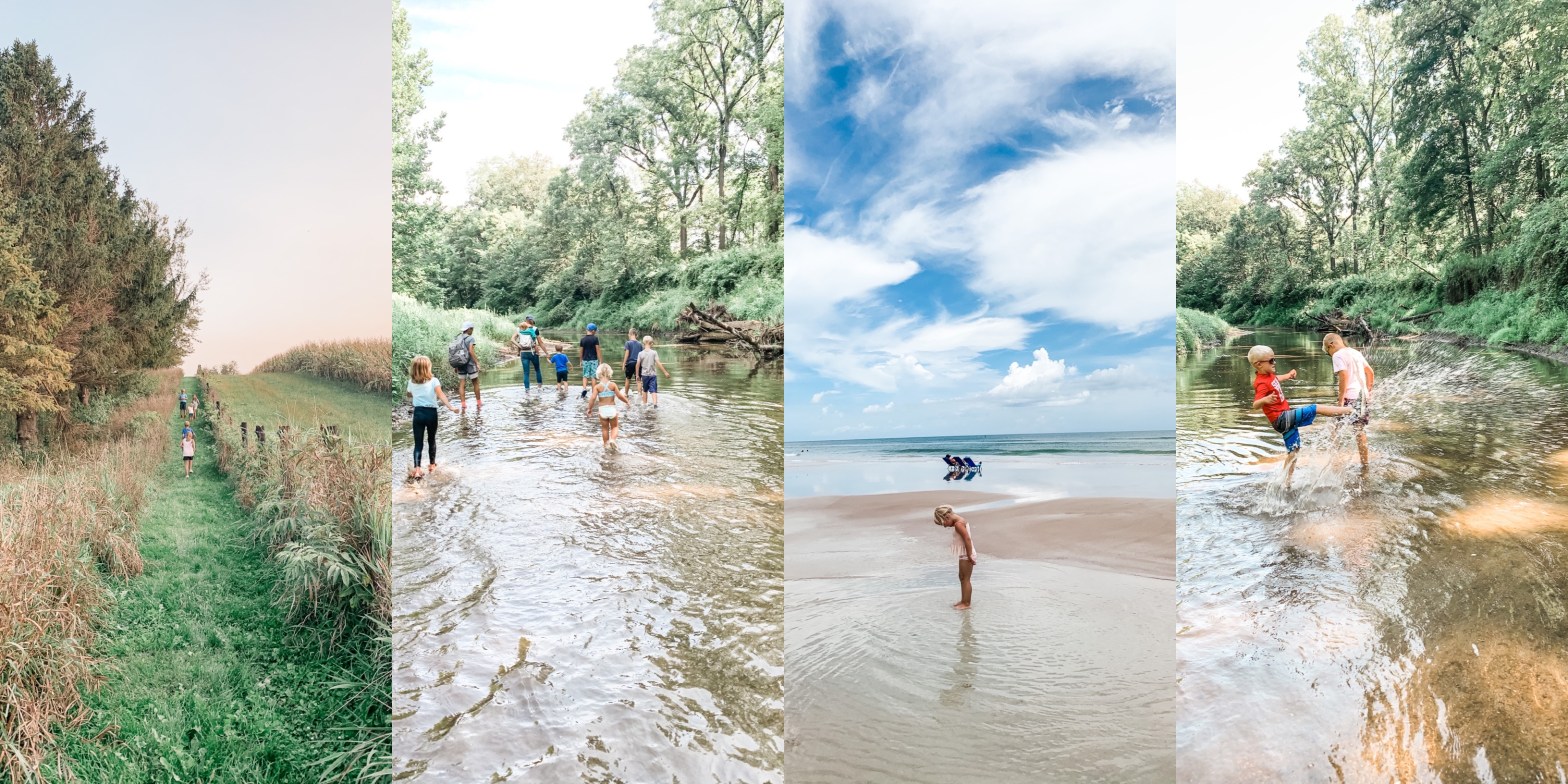
Since that time, God revealed His goodness and His majesty, over and over again: remote work schedules and cancelled sports commitments gave us the gift of time. Time to take family walks on our property, to sit around a campfire and debate the qualities of a perfectly roasted marshmallow (slow roasted, golden brown, gooey on the inside, for some – charred on the outside and barely warm on the inside, for others), creek walking, and discovering rhythms of stillness and rest.


As the community around us continues to “re-open”, I am able to hold loosely to our schedule, knowing that tomorrow could look completely different than our penciled-in plans (if it does, maybe it will hold more time for cozy blankets and hot coffee). Cancelled ball games create time to cook a healthy meal at home, and time to gather people around our table.


In the moments that I forget to trust in God’s goodness and recognize that my heart is weary, I am reminded of James 4:13-15,

“Come now, you who say, ‘Today or tomorrow we will go into such and such a town and spend a year there and trade and make a profit — yet you do not know what tomorrow will bring. What is your life? For you are a mist that appears for a little time and then vanishes. Instead you ought to say, ‘If the Lord wills, we will live and do this or that.” 

Whatever tomorrow may hold, God’s plans are greater than our own; unwavering, and certain. He is steadfast. Whatever our desires for tomorrow, God’s plans are greater – for His glory and our good.

Mary Sievers, and her husband Jon, raise four children on an acreage just west of the Quad Cities. Their four children attend Morning Star Academy. Mary enjoys being outdoors, great coffee, and is a “work from home mom” as a co-owner of a women’s boutique, Caty + Rose Market, in the Village of East Davenport.

Good Mood Gift

Kaitlin Walsh

For this blog, I was asked a simple prompt: We’ve found ourselves still living in the midst of a global pandemic. Death tolls rise and restrictions remain. And yet, God, too, is steadfast. What is God revealing to you so you know He is Trustworthy, Beautiful, and Good? 

Immediately my mind went to the highlights of the summer: The wind in my hair as I rode on a speedboat, the kids finally seeing their grandparents after quarantine, the one day my two year old actually used the potty and I thought I was seeing the end of almost a decade of diapers (spoiler: I wasn’t). These were moments that filled me with joy, and absolutely God was in every one of them. However, where I really see the proof of His presence is when I feel a joy that stems from… nothing.

Let me explain. During the slog of spring quarantine I remember telling my mom that I seemed to be on a “three days on, one day off” schedule. That is, I typically had a run of three “I got this” days, tackling the home schooling, the extra cleaning, cooking and stress with relative grace. Then came day four and it was bad news bears—I’d feel overwhelmed, crabby, lonely, you name it. My mom said she noticed the same in herself and we had a good laugh about the predictability of our mood swings and how our husbands should mark their calendars for the Day Four Meltdowns. While we spent much more time discussing the nuances of the bad days, I got to thinking about the wonder of those good ones. How I would sometimes go to bed feeling as though I just could not handle this, and wake up with a completely new outlook. Nothing in the world had changed, my circumstances were the same and the news was just as frustrating and terrifying as the day before, but something in me just felt more capable, hopeful and joyful.

And that’s it. That transformation from bad mood to positivity are the moments where God has proven His goodness and trustworthiness to me. That ability to find joy when the day before you could find none, the potential to suddenly see the good side in a bad situation, that is where God resides. An unfounded good mood is God’s beautiful gift to us and we should recognize it as such.

Our friend St. Paul is a wonderful example of a man who recognized and drew on this gift of joy regardless of hardship. Take Philippians 4:11-13: “…I have learned to be content whatever the circumstances. I know what it is to be in need, and I know what it is to have plenty. I have learned the secret of being content in any and every situation, whether well fed or hungry, whether living in plenty or in want. I can do all this through him who gives me strength.” Paul experienced imprisonment, beatings, being stoned, isolation and more. But through it all, his writings transmit a feeling of joy, contentment and peace. 

I’ll admit that I am not yet at his level. Facing what he faced, or for that matter, what Jesus faced, it’s hard to imagine a good mood shift taking place quickly. And I will acknowledge that I am lucky to have experienced a 3:1 ratio of happy to sad days during quarantine. I do know the beast of depression and anxiety, of experiencing more of a thirty-days-off, one-day-on type of schedule. But I know this as well: with a combination of prayer, love, faith and time, God will help those brain chemicals to shift, so that one day you will wake up ready to face the day, even when the day seemed so lousy just yesterday. 

So bring on the pandemic, the riots, the economic turmoil, the hurricanes and fires. God will be there at the moment you think you can’t handle anymore, adjusting your attitude, inducing a calmness that seems completely out of place given the circumstances. That is His good mood gift and proof of His goodness and love for us.

Painting note: This is a rather serious-looking self portrait I made after quarantine. In it I’ve highlighted the limbic system in the brain, which is your emotion-control center. I like to imagine God right there, pulling the strings on that limbic system, creating more happy hormones that put the peace right there in my brain, body and heart.

Kaitlin Walsh is an independent artist specializing in abstract anatomy paintings. She spends her time portraying the beauty and complexity of the human body through her store, Lyon Road Art. Kaitlin lives happily in Bettendorf, Iowa with her husband and three children. Two of her kids are students at MSA.

Stay the Course

Betsy Tubbs

My son began attending Morning Star Academy as a 3-year-old preschooler.  He came home from his first day of school and told his Dad and me that “School was fun, except for the work part.”  This was the beginning of a challenging educational journey through MSA up to his graduation! 

School can be hard and for a lot of kids, it is hard.  And that hard is tough for students and parents alike and sometimes we can lose perspective.  Sitting at the kitchen table night after night watching and listening to them struggle, cry, and feel dumb is so very difficult!  Sometimes it’s tempting to throw in the towel.  However, from someone on the other side of the challenging educational journey MSA offers, know it is worth it and God is good through it all.

My son graduated from MSA, went on to college, where he thrived, enjoyed learning and graduated with his BA.  MSA prepared him to defend his beliefs and respectfully challenge his professors!  The transition from MSA to college was easy.  He watched his new friends struggle while he adapted easily.  He finally felt like the smart one!  He wrote numerous papers, was regularly praised for his writing ability and was asked to present and defend one of his undergraduate papers at a national conference.  Who would have guessed that the struggling MSA student would earn the honor graduate award of his major?   

Fast forward a few years, he is in an intense language program for his job.  He is taught Spanish for 8 hours a day, for 6 months with the goal of passing an oral interview test that grades his fluency in the language.  When he started the program, he told me he was light years ahead of his co-workers.  He could see exactly where his Shurley grammar lessons were helping; he could see exactly where his Latin classes were helping and of course, he could see where his Spanish classes were helping.  My son, 20+ years after beginning MSA can truly see and experience the benefits of his challenging educational journey.

To those parents that are tired – stay the course!  To the teachers that are tired – stay the course.  To the students that feel dumb and don’t understand why MSA is having them do what they have to do – stay the course.  Know your parents and MSA teachers want the very best for you and of you!  When you feel like throwing in the towel, don’t!  It is worth it – every dollar, every assignment and every night at the kitchen table!  God is good and He is working through the Morning Star Academy community.

Betsy Tubbs is the Senior Parks Manager for the City of Davenport Parks and Recreation Department. She and her husband are members of Bettendorf Christian Church.  Betsy served on the MSA school board for 12 years. The Tubbs’ have two children – a son and a daughter – both are graduates of Morning Star Academy.  

One Day at a Time

Mary Sievers

The week of March 8th, 2020 feels like one that will be engrained in my memories for the rest of my days. “Coronavirus” had become a household term, the jokes were clogging our Facebook feeds, and cruise ships coming back to the United States were being quarantined. My husband had been telling me for several weeks prior to be ready for the possibility that Coronavirus could hit the United States fast and hard, and that it likely meant sheltering in place with our family for a period of time. To which he assured me “You won’t have to do it alone.”

That week, we were taking care of the final plans for our spring break trip to Florida, but I could sense that things were changing quickly. Cities on the west and east coasts were issuing shelter-in-place orders, and the “stay home” hashtags were popping up on social media. I thought through some of the simple pleasures of life that might be put on pause and tried to make sure to cram them in to our week: lingering in the coffee shop, ruining our supper with “Here’s The Scoop” ice cream on our way home from school, and enjoying dinner out with friends.

Throughout the week, the inevitable toilet paper jokes began, but the actual panic was evident as I entered Costco and watched the people head to the toilet paper aisle in droves. Rare was the passed cart that didn’t have a case, as I checked off our grocery list. As the last pallet of toilet paper emptied, I noticed a woman following people around the store waiting on the abandoned cart to find her opportunity to purchase some. Honestly, it was an eerie feeling and I began to wonder if this is how heading to the grocery store would always look, from now on.

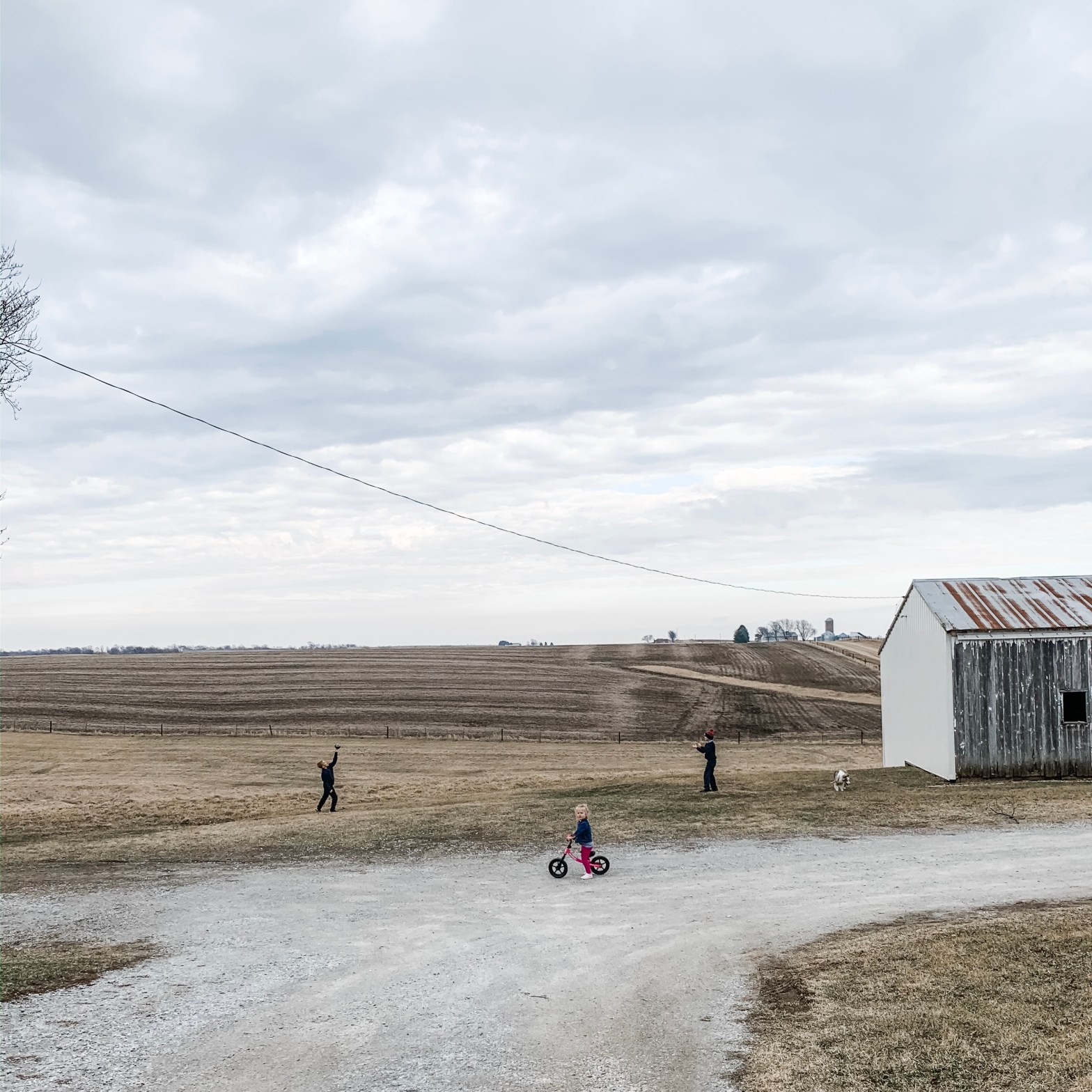
As our children played at home that evening, my husband and I began to discuss the distinct possibility that on Monday morning our children would not be returning to the school building. That he would likely not be headed in to his office, and the feeling that things were beginning to feel, different. But, as I watched my children at play, the peace of the Holy Spirit came over me, and laid on my heart “I know what is going on, I am in control, I have given you enough for today”. I snapped a quick picture of my children at play, and fired off a quick text to a friend that said “quarantine us for 14 days, we’ll be fine”.  

I clearly remember picking my children up from school the next day. As I watched them come out of school, a couple of tears slid down my face. We had been paying close enough attention at home to be prepared that our kids would not be headed back to school for a few weeks, and likely not at all. And yet, as the announcements came about at the end of March that schools in Iowa would not open for the remainder of the school year, my heart was grieved again. 

The 2019-2020 school year was our family’s first year as a part of the Morning Star Academy family, and I was sad to watch it end prematurely and abruptly. I suddenly felt that they had been robbed of precious time and memories. And yet again, the Holy Spirit quickly laid on my heart “I know what is going on, I knew that this is how their first year at Morning Star was going to look, and you can do this one day at a time.

As we continued to navigate distance learning and “crisis schooling,” a close friend and I talked through that same sentiment, one day at a time. Within days of that conversation, it was Easter Sunday. That morning, I received an e-mail from my mom. She was sharing a link to the sermon from her church, and encouraged me to watch, because the pastor was sharing a story about my dad (whom we had lost to cancer in May of 2019). The sermon was answering the question, “Where do we put our hope?”. The pastor had walked closely with my dad during his battle, and was sharing words from some of the last pages of my dad’s journal. “This is my walk with the Lord. One day a a time. God is my refuge and strength, my ever present help in trouble. I rely on the Lord Jesus Christ to carry me through. I turn myself over to his strength.” One day at a time.

I have been learning, through all of this, that when we stop putting our hope in things of this world (for me, through this: vacation, our children’s education and activities, social gatherings, friends, and being in control of our schedule), and shift our hope to the Savior, who has taught us to pray “give us this day our daily bread.” (Matthew 6:11) we begin to better know our Savior that reminds us that we should not worry about tomorrow (v 34). While we sleep, our Father is at work. When we knock, He answers (Matthew 7:7). When we put our hope in the Risen King, who has won victory over the grave, we can put our eyes on eternity and find our refuge in God. “Because of the Lord’s great love we are not consumed, for his compassions never fail. They are new every morning; great is your faithfulness.” (Lamentations 3:22-23)

Mary Sievers, and her husband Jon, raise four children on an acreage just west of the Quad Cities. Their three sons attend Morning Star Academy, with their daughter headed to MSA preschool in the fall. Mary enjoys being outdoors, great coffee, and is a “work from home mom” as a co-owner of a women’s boutique, Caty + Rose Market, in the Village of East Davenport.