If there’s one title that has stuck with me and given me pause for nearly a decade it is pastor-theologian, John Piper’s, Don’t Waste Your Cancer. The book was an expansion of an article he wrote on the eve of his prostate cancer surgery. The phrasing expresses a rock-solid belief that God is in control of every event for soul-shaping purposes.
In light of that title, I’m challenging myself to consider what soul-shaping purposes God has for me in this unique moment in history. Here are a few of my musings.
This virus is causing me to . . .
1. Sacrificially serve my neighbor
Denying myself the pleasures of gathering — even good, godly gatherings like corporate worship — serves my vulnerable neighbor. Who would have thought that not corporately worshiping would be a way to love my neighbor? Or, consider this. Who would have thought that knocking on my neighbor’s door and asking, “Do you need any toilet paper?” could be a missional activity.
2. Quietly reflect on my soul’s idols
I’ve had revelatory, cold-sweat moments of anxiety. I had no idea how much I’ve come to rely on 392 Coffee; or how much I trust my bank account. My anxiety has that ridiculous range. This virus gives opportunity to see into the soul.
3. Appreciate the moment
Initially, solid information had a two to three day shelf life. Then it was 24 hours. Then it was six hours. Now it is two hours or less. This virus is causing me to measure life by the moment; basking in that reality and enjoying those I am with and what I am doing right now.
4. Read the Psalms
The Psalms were given for this moment. While I haven’t plumbed the depths of anguish or terror like David in Psalm 55, I’m closer. His words are more real. His answers are more solid.
5. Rest in God’s character
“When the earth totters, and all its inhabitants . . . ” (Psalm 75:3a)
It really feels like my world is tottering. Good news . . .
“It is I who keep steady its pillars.” (Psalm 75:3b)
Watching the stock market plunge feels much like the second half of Psalm 46:2,
“though the mountains be moved into the heart of the sea.”
Yet, the psalmist writes, “We will not fear.”
Why not?
“God is our refuge and strength, a very present help in trouble” (Psalm 46:1).
These are five, soul-shaping purposes God has shown me in this unique time. How is God using the virus to shape your soul?
Rob Spykstra has been part of the classical Christian movement for nearly twenty years, first as a homeschool dad, then as a fundraiser, and now as a headmaster. Rob is married to Tamra. They have four children, all classically trained. He serves as an elder at Sacred City Church. Tamra and Rob enjoy hiking and walking, particularly in Rob’s home state of Colorado.
“Trust in the Lord with all your heart and lean not on your own understanding; in all your ways submit to him, and he will make your paths straight.”Proverbs 3:5-6
Roads are interesting. They lead towards somewhere and away from somewhere at the same time, creating a direct route or a meandering one. Have you ever had a road follow you? I did. My road started following me back in college.
I had my road map all figured out – studying music performance. My professors advised me against it, suggesting music education instead. Music education? That would involve teaching – in a classroom – with kids. I didn’t dislike children, but I wasn’t drawn to teaching them en masse. I figured I’d become a tutor. I taught private lessons and occasionally conducted master classes from behind a podium, waving my baton. But conducting a large group of young musicians required little verbal interaction. I was safe. No veering off the road for me.
I soon discovered private tutoring didn’t pay the bills. I needed additional work, so I worked any job that was available: waitress, receptionist, box-folder, secretary, accountant. Between all of my assorted jobs, I often worked 70 hours a week. I was happiest when I was teaching. I was tired of working so much and wondered if the classroom wouldn’t be so bad. But I also knew I’d need additional education. The road I was on was starting to feel like driving back and forth on I-70 through Kansas – no offense to Kansans.
I taught adjunct at a couple of colleges, but only for a handful of hours each week. I went back to grad school for performance. My rationale was that I would take classes for a couple of years, get a Master’s degree, and with luck, get a full-time position in a college. I battered myself with hours of practice and writing papers. I eventually acquired not a degree, but a painful performance injury. I’m ashamed to say that that entire time, I never let God sit in the driver’s seat. I try and imagine what he was thinking; watching me drive in circles and curly-q’s all those years. He had a road laid out for me, but I avoided it like the plague.
A few years later, I was married and had a daughter. I was still tutoring, playing in symphonies, and working full-time. I watched friends thriving in their careers, happily chattering about their work. My teacher friends were especially chatty. I felt resentful that I hadn’t listened to my professors and studied music education. In my late thirties, I became very sick. I had an immune system disorder and suffered for three years before having a surgery that left me temporarily disabled for nine months. I couldn’t work and the FMLA at my job ran out. I was on unemployment for two years. I put in applications for every available job, and was hired for none. I was truly worried. My “road” was not merely blocked, it was gone. I grudgingly decided to sub in the public schools. It would be sporadic, but it would be work – and it wasn’t as bad as I envisioned. Actually, the kids were not usually a problem – unless they set firecrackers off in the classroom (no joke, it really happened.) I still taught private lessons, but I could no longer perform as I once did.
The years I was on unemployment were hard. Teaching became increasingly enjoyable. “Okay, Lord,” I thought, “maybe I can teach in the classroom. Is this what you were trying to say?” I was facing the one road that I had avoided for two decades. It took a miracle to pick me up, set me on the way, and gently nudge me forward. That nudge came from Casey Schutt and Cheryl Headley seven years ago. God was abundantly merciful and kind. Taking my hands off of the wheel and going where He knew I should go turned into a blessed, joyous adventure! My first few years at Morning Star were a challenge. I weekly (daily?) sought Mrs. Headley’s advice, and was constantly tweaking and revising lesson plans. The Morning Star community was always so graceful, so loving and helpful that in time, I felt that I had arrived “home.” My students and I learn more together each day. I would not do anything else in the world. And, I praise God daily for his perseverance and grace in leading me here.
Joanie Mercy and her husband, Frank Drew, are both musicians. Their daughter Angelique is in 7th grade at Morning Star Academy. Mrs. Mercy graduated form Augustana College, attended University of Iowa College of Music, and formerly performed in regional orchestras including the Quad-City Symphony, Knox-Galesburg Symphony, Muscatine Symphony Orchestra and the Milwaukee Chamber Orchestra. Mrs. Mercy teaches K-6 Latin and K-8 Music at Morning Star Academy and also conducts the MSA String Ensemble. She currently has 15 private students.
Art Linkletter introduced us to the colloquialism, “Kids say the darndest things.” Most parents have stories of times and places which mark the truthfulness of this observation. The wildest things spoken at the worst possible time produce fertile soil for a lifetime of laughs and gasps. Mr. Linkletter reminded us that children have a unique understanding of life. They are unencumbered by the social rules that age posits on a life – and we laugh at their innocence and naivety.
Imagine with me the unspoken response to Jesus’ words in Matthew 16:24-25 when he says to his disciples, “Whoever wants to be my disciple must deny themselves and take up their cross and follow me. For whoever wants to save their lifewill lose it, but whoever loses their life for me will find it.” I wonder if the disciples had the same response some parents have when their children say one of those “darndest things.” Jesus begins this teaching moment with an eye to those who were trying to follow Him. It quickly changed into a statement suggesting life comes from death. The cross in verse 24 is clearly the Roman executioners chosen method of death. But then Jesus clears up any leftover murkiness with a bold statement that whoever wants life will have to lose it.
Here’s the truth that Christ-followers have to wrestle with: are we willing to die to ourselves in order to find true life in Christ? Although every individual situation is different, I am convinced that there has to be a time in our life where we die to ourselves. This is one of the conundrums of scripture – life coming from death.
For me, death was on Highway 68 north of Greensboro, North Carolina. For several years I worked hard to advance in my career with a national wholesale distributor. Things were looking up in my professional life but I couldn’t shake the feeling that God was calling me to pastor. The objections I rehearsed to God in my prayers were: but I’ll have a reduced paycheck, this will take me away from family, and Lord, I don’t have the proper training. But the persistent and consistent call of God wore me down and I had to die to myself right there. In the car. On the way home from work.
What if this theme, Jesus teach us how to die, became the cry of our hearts? It might change up how we interact with those around us; requiring us to surrender self daily to this end. My children attended Morning Star Academy which put a great emphasis on this personal interaction with the deep theological truths of scripture. They routinely used a formal question and response founded on the Westminster Shorter Catechism. Even if you are unfamiliar with the responsiveness of this, there is great benefit in committing to daily asking for wisdom in how to die. At first it might feel weird to say “Jesus teach us how to die”, but this is the catalyst to true life. When we grasp this truth, we won’t regret it.
Dave and family moved to Muscatine in 2012 to serve at Hillcrest. He has been a pastor since 2005 and enjoys telling about how God led his family into the ministry. He grew up as a PK (Pastor’s Kid) and moved several times as a child. It was during these years that he settled on the one thing he wouldn’t do with his life- become a pastor. However, God had different plans. Dave met his college sweetheart during their freshman year and after graduation, Dave and Susie married and began working in the wholesale supply industry. They also welcomed Will and Lauren into their family. During 2004, God called Dave and his family to the ministry. He comes to Muscatine via a great church in rural Jones County Iowa. Pastor Dave’s greatest desire is to see lives impacted by The Truth.
As I posted Skyler Sandry’s excellent article on Wednesday, I was a bit remiss in that my timing could have been better. Our new blog series, focusing on the penitent season of Lent, probably should have started on Ash Wednesday, the day that marks – literally, with ashes – the beginning of this season. February and Lent overlapped this year, they often do, and Skyler emerged as I learned about the unstoppable high school basketball team at Morning Star when I read about them in the local paper! When I asked Skyler “Will you write?” he said “Yes” and when I added, “How about next week?” he said “Sure.” Perhaps this kind of spirit is the perfect cusp of passions (love) and the passion (Christ’s sacrifice on the cross.)
As Christians all over the world, we now step into Lent and journey with Jesus through his ministry and eventually to his death. We do this in preparation for the day that makes us who we are – for we are indeed “Easter People.”
Lent is a season of penitence and renewal; forty days, not including Sundays. If you are wondering about this funky math, Sundays aren’t included because they are meant to be “little Easters” and reprieves from whatever fasts we choose. These “fasts” are meant not to restrict us, but bring more freedom – creating more space for us to draw near to God.
On a personal note, I tend to get obsessive during Lent, which probably means I’m missing the point. I’ve gone vegan before, given up my car; I often keep Lenten journals. This year, I’m leading a writing group at St. Paul Lutheran Church where I serve as Children’s Pastor. But some years, I try to give myself a break – giving up something small, or indulging in the restful practice of keeping Sabbath.
Whatever we choose to surround ourselves with for these forty (plus six) days, we are all marching toward the same destination – Jesus’ salvific work on the cross, his suffering and death on our behalf.
In many ways, Jesus teaches us how to die. So that’s our theme for Lent. Not because we’re morbid, but instead, realistic: the journey to know Christ is costly; it cannot manifest without death – the death of self, the relinquishing of our sin, the “death” of “Not my will, but thine, O Lord.”
So, friends. When you read this handful of blogs from board members, faculty, alumni, and parents, be reminded of Christ’s journey to the cross, what it teaches us about sacrifice, and how it requires our own death, too.
And may we all have a holy Lent.
Kendra Thompson is a Part Time Children’s Minister, *very* part time Director of Communications at Morning Star Academy and mama to Joe, in Mrs. Norton’s A.M. Kindergarten class and Andi (short for Andromeda) in Pre-3 with Mrs. Boggs. John and Kendra moved to the quad cities 8 years ago, and were delighted to find a classical Christian school right here in their own community. Not only does she manage this blog, but also writes at www.crylaughsnort.wordpress.com
I’ve played basketball in small environments throughout my whole high school and collegiate career. I received recognition on the state level for athletic accomplishments in high school, and was even ‘All American’ two times in college. Throughout these accomplishments, it wouldn’t have been nearly as memorable or fun without the concept of “big time athletics.”
The general idea of big time athletics is that regardless of the level of competition, which sport, or how many students the school has, you give the student athlete the experience they would get at a large public high school.
This is important on a few different levels: Level 1: recruitment and retention of student and non-student athletes. Level 2: the overall experience for the student athletes. Level 3: the overall experience for the non-athletes that attend the school. Level 4: the overall experience for the faculty, staff, and families.
Creating a culture of excellence that honors God is extremely difficult and requires a level of intentionality that involves the whole team, coaches, and school administration. One of the biggest reasons I am personally trying to implement this philosophy at Morning Star Academy is to give the students the memorable experience that I had.But it is also my hope to retain them in the promotion from junior high to high school.
Historically, Morning Star Academy has lost students during this natural transition due to parents wanting their children to get a “real” high school experience. Interestingly enough, this “real” experience can happen at Morning Star, with the implementation of something like “big time athletics.”
Not only will big time athletics enhance the program on a competitive front, but it also attracts more student athletes, which increases the enrollment numbers.
We have a unique experience at Morning Star Academy in that we are able to focus on Christ and what He did for us, while giving students a very similar athletic experience to what they would receive at a school like Bettendorf High School. A hidden secret about Morning Star is that we have a co-op agreement with Bettendorf, which means if we don’t offer a sport that the student wants to play then they can play it at this neighboring school while maintaining their classical Christian education here.
I believe that a heightened level of attention, detail, care, and effort towards our athletic programs will have a direct impact on enrollment and deepening the student experience; something we should all strive for. The ultimate goal is to honor God through all that we do. We can assure this happens when we keep Christ as the top priority.
Skyler Sandry is a financial advisor for Merrill Lynch and also coaches the men’s varsity basketball program at Morning Star Academy. He and his wife Rebekah have two sons, Tatum (2 year old), and Canon (4 months old). Skyler played high school basketball at Morning Star, at Judson University for freshman year of college (which is where he became a believer), and then transferred to Emmaus Bible college for his final 3 years of basketball, and graduated with two degrees in Biblical Theology and business administration.
This is February, the month that is traditionally about love. What do you love? The usual things probably come to mind. Common answers would be your spouse, kids, God. Our children might say their favorite toy or candy.
I have children that range from twenty-two to eight years old. Each of them is a unique gift from God. These relationships are important to me and I love our time together because I appreciate how fast they grow and are out of the house.
When my husband and I were faced with a school decision for our youngest, we wanted to find a school that helped reinforce our goals for her. We started doing research.
We were not new to Christian education but we were lacking in the basic knowledge of the classical Christian education model. According to the Classical Christian website, “Classical Christian education establishes a biblical world view (Paideia) by incorporating ancient methods of student development.”
This piqued our interest and led us to meet with staff and tour Morning Star Academy. We were hearing great things. We then consulted friends, our older children, our pastor and experienced teachers and trusted family members for advice.
According to the ACCS, “…since the time of the early church, Christians have been about training students to love the true, the good and the beautiful. And to “rightly order” those loves so that we love first our God, and then our neighbor. This means that we order our affections as God would.”
This value statement really resonated with us and after much prayerful deliberation, we decided that we needed to put God first and trust that He had a plan for us and that the classical education model really did align with what we were trying to reinforce for our daughter.
We ultimately chose to make a leap of faith and to embrace the Classical Christian approach with our youngest daughter at Morning Star Academy. We love watching her develop a biblical world view and order her loves; both of which prepare her to incorporate these values into her life and ultimately pass them on to the next generation.
Laura Miller holds a Bachelor of Science degree in Psychology from Western Illinois University and a Doctorate of Chiropractic degree from Palmer College of Chiropractic. She loves to cook, read, play volleyball, travel and watch her daughters play golf. Laura and her husband Matt have three daughters, the youngest of which attends Morning Star Academy.
Finally, brethren, whatsoever things are true, whatsoever things are honest, whatsoever things are just, whatsoever things are pure, whatsoever things are lovely, whatsoever things are of good report; if there be any virtue, and if there be any praise, think on these things.Philippians 4:8
Last weekend, I went to see Little Women with two of my three daughters. It is a family favorite, so we were hesitant to see a new version, worried that another re-telling might not do justice to characters who feel like cherished friends. But we loved it! The New England countryside is beautifully filmed, the four March sisters are radiant, affectionate, dutiful, and honest, and the screenplay offers a fresh perspective while remaining faithful to the novel. We even loved the determined and spoiled Amy March in a new way.
My love for Amy and for all the Little Women came from my mother, as did my love for reading.
Children learn to love what we teach them to love.
This principle is what Augustine calls ordo amoris, defined by C. S. Lewis as “the ordinate condition of the affections in which every object is accorded that kind and degree of love which is appropriate to it.” With so much competing for their attention, it is imperative that children learn to rightly order their affections, to love things that are true, beautiful, and good.
In our Morning Star classrooms, showing students what to love is one of our main purposes. Recently, the seventh graders began to read The Pilgrim’s Progress. This classic of Christian storytelling will challenge them as readers, but they will have the opportunity to learn about accepting encouragement from trusted friends, about facing challenges faithfully, and about pressing on when despair presses down. Our freshman will continue to press in to Aristotle’s Rhetoric, and they’ll take away from it an understanding of virtue and of the good things that lead to happiness.
The challenge for all of us, teachers and parents alike, is to remember to look for those good things. As we struggle through the mundane trials of everyday life, and even as we see injustice, ugliness, and pain in our world, we must still give focused attention to finding the beautiful, the good, and the true. “The world is indeed full of peril, and in it there are many dark places; but still there is much that is fair….” We must look for what is fair—a good movie, a loving friend, a kind deed, a sunset, a mountain, a painting.
Most importantly, as we share these loves with our students and children, we’re also sharing what they reveal, the presence of our loving and gracious heavenly Father, author of all that is beautiful, true, and good.
Brenda Porter teaches English, writing, and rhetoric at Morning Star Academy. She and her husband, Rob, are the parents of three grown daughters.
Art—good art—innately harbors grace. Have you ever observed a painting that just speaks to you? Something about the composition, the colors, the subject matter is just working and you’re filled with a fleeting harmony. Or perhaps, like me, you get that feeling during its creation. Sometimes, when I’m lucky, I work on a piece that is simply effortless; it feels as though the painting is pouring from my fingertips. I’m a terrible singer (my five-year-old informed me I sound like Scuttle from The Little Mermaid) but I’d like to believe it is the same feeling a musician gets when perfectly landing that high note, and in fact, I do refer to these occasions as the “singing” moments of painting. Feelings like this are a gift from God; a touch of grace from His own hand.
I think we are given these gifts because our Lord loves art, too. For one, He is the ultimate artist, having created this beautiful universe. Even the trees He made sure were “pleasant to the sight” (Genesis 2:9)! For another, it is He who equipped artists with their talent and creativity, a gift that can only be meant to echo His superlative artistry. And it seems He wants us to appreciate these things we find beautiful and profound. As Paul says, “Finally, brethren, whatever is true…whatever is pure, whatever is lovely, whatever is gracious, if there is any excellence, if there is anything worthy of praise, think about these things.” (Philippians 4:8). Let us remember, though, that “whatever you do, do it for the glory of God” (1 Corinthians 10:31). It would be a waste, then, to create art in a random or purposeless way. Instead, art should be used as a tool to glorify God, whether in the creation of it, the reveling in it, or the endorsing of it.
What does this mean, exactly? Do we need to start adorning our homes with Da Vinci’s Last Supper and the like? No, not necessarily. You simply need to create or seek art that places the Lord in the forefront of your mind and heart, something that immediately starts you on a mental path to worship. I will refer to this as Glory Art. Art is, of course, hugely subjective, so Glory Art is going to be different for everyone. For example, a lovingly rendered nature scene may remind some of Genesis and His capabilities. For others, an abstract composition may inspire a harmony and peace that you know stemmed from Him. Or, to provide an incredibly specific example, I have a painting I created of the temporal bone of the skull (I specialize in anatomical art, which hopefully makes that seem a little less weird). It highlights a protuberance called the petrous portion of the temporal bone. This reminds me of St. Peter, since petrous means rock, and Peter, of course, is that rock upon which the church was built. Every single time I look at it I think of Peter and his follies and transformations, and I feel a kinship to both him and to Jesus. So you see, there are infinite ways artistry can instill Jesus in your heart, and really, it is not my purpose or desire to define it for you here.
I can, however, do a better job defining what Glory Art is NOT. It is not art whose sole purpose is to anger or disgust. For example, I went to a show once that had an exhibition entitled “The Nuclear Family”. It was comprised solely of mutilated and decapitated dolls. In case you are wondering, this did not make me feel the presence of the Holy Spirit. It is not art that is so absurd or grotesque that it becomes shocking and somehow newsworthy, like the banana duct taped to the wall that sold for $6 million, or the 2018 show in the Netherlands comprised of genitalia and excrement. And most of all, it is not sacrilege. It is altogether too easy to find paintings, sculptures and installations whose primary purpose is to defile and degrade everything that we as Christians find holy. I refuse to honor any by describing them here, but feel free to do a quick search on the subject and prepare to be disappointed, disgusted and shocked.
For too long artists have been using such reactions as a quick and easy way to get attention, a crutch to be called “cutting edge”. This idea that art is supposed to generate feeling and shock is a strong feeling, therefore anything shocking is good art, has been exploited to the point of ridiculousness. A label of “different” seems to be the only requirement of art today; no longer is it built upon a foundation of talent, education or profundity. Artistic culture has gotten so backwards that it seems the most radical artists right now are the ones who, gasp, actually know how to draw, as explained by April Hopkins in a 2019 article! Indeed, open any art magazine today and you’ll see skill-based rendering or, even more so, anyone using Christian principles as their focal point, is in a clear and drastic minority.
My desire, my dream, is that soon the pendulum swings the other way, since by eschewing subject matter that is in any way reverent, by disregarding the talent lovingly provided by God, we are turning our backs on a rich and powerful tool for glorifying the Lord. And you know what? The change starts with us. If you see a painting that sings to you, that brings Jesus to mind, consider purchasing a print or a piece. If you hear about an art exhibition that somehow encapsulates the Holy Spirit, even obliquely, consider showing up. A small bit of effort can make a world of difference to the artist, and, moreover, we can start to show the world we are ready for a new wave of art.
Kaitlin Walsh is an independent artist specializing in abstract anatomy paintings. From a young age, she exhibited an immense fascination with both art and science. As a university and graduate school student, she focused her studies on both disciplines. Kaitlin lives happily in Bettendorf, Iowa with her husband and three children – two of whom attend Morning Star Academy. If you are interested in her work, note that she is having an art show on February 7 at Beréskin Gallery in Bettendorf from 5:30-7:30. Admission is free and snacks and music will be provided. For more information please visit lyonroadart.com.
In an empirical world where if it can’t be measured it isn’t real, we need days like today, Epiphany, to remind ourselves that we live in an enchanted world, that is, one that cannot be so easily quantified, measured and put into a nice, neat little box.
Epiphany means “revelation” or “an unveiling” or “manifestation.” In the church calendar it is celebrated on January 6th and although little known to our American evangelical churches, it has much to do with us Gentiles. Epiphany is the culmination and the pinnacle of the twelve days of Christmas; a celebration of the manifestation that Jesus was not merely the prophetic fulfillment of Jewish aspirations, but that He was and is the hope of the world.
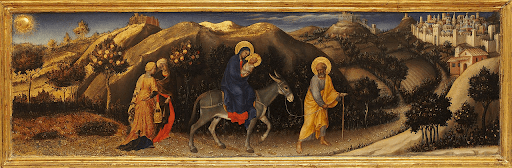
Specifically it is a celebration of the Magi who mysteriously entered into Joseph’s and Mary’s lives with lavious gifts for their son; Magi who just as quickly left, never to be heard from again. It is these men whom God made wise through His creation, a star. It was these pagans whom He revealed through Scripture specifically that their Hope lived in Bethlehem. This Christmas story is truly enchanted. It has mystery and intrigue. We cannot put it into our nice, neat little boxes.
But most importantly it these Magi who represent us as those, who like them, are called into God’s enchanted story, a story that began with the Jewish nation, but one intended for all. It is this story that gives us hope for an enchanted new year where He will be working to quietly order our lives to redeem and renew all that has been darkened by sin.
So as not to lose our appetite for the enchanted, this month Morning Star will dive deep into fables and myths. We know that all of these stories have an aspect of The Story, God’s story of redemption. And again we will be reminded that we live in an enchanted world that we cannot quite fit into our nice, neat little boxes.
Rob Spykstra is headmaster at Morning Star Academy.
In high school, I had my own sense of style: bleached streaks in my dishwater blonde hair and a preference for thrift store clothing. I wasn’t trying to stand out, but neither was I working hard to blend in. So, in 12th grade social studies, I was surprised one day when a classmate with a shaved head, knee-height combat boots and a leather jacket got my attention by shouting, “Hey counter culture, give me your pen.” When I puzzled at this new nickname, he informed me that “no one dresses like you at our school.”
It was a bit of a surprise to be singled out. I wonder now what it would have been like to wear a school uniform every day, like the students do here at Morning Star. Would I have still been pegged as “different?” There’s no sense in speculating. Especially since my other observation is that being called “Counter Culture” is a compliment.
Not only that, but to be a Christian is to be countercultural – to look to Christ for our identity and purpose more than the awards and possessions and trappings of this world. And we can take our cues from the biblical narratives leading up to Christmas.
In Luke’s gospel, a couple in advanced age are told they will give birth to a son who will announce the Messiah. Fearing God, they are doubtful at first, but then believe. The father of this awaited child is rendered mute until his son’s birth.
Later in Luke, a peasant girl of Nazareth, whose family lives under the constant threat of Roman occupation, is visited by a Divine messenger. While the announcement of a birth surprises her, she accepts the angel’s news. “Behold,” she replies. “I am the servant of the Lord. Let it be with me according to your word.”
Even her betrothed spouse, wondering if these secondhand words from God are true, sleeps and dreams and an angel visits him, too. They head to Bethlehem and await the promised birth not only of their firstborn son, but a king, the Messiah, who will liberate God’s people from their sins and bondage.
You could argue that the stories of Advent, leading up to Christmas, are counter-cultural. Rather than being caught up in the powers of this world, they are all about listening to God and trusting that his kingdom is the only one worthy of our allegiance and praise.
I don’t know if you’ve ever been singled out as being different in your workplaces or classrooms. But I do know that if you’re reading this, you have some connection to the Christian narrative, found in scripture, that comes alive at Christmas. So, take these stories to heart. Let them “dwell in you richly,” as the Apostle Paul says, and as you celebrate Christmas this year, take delight in the invitation to be countercultural.
Kendra Thompson is a children’s minister, a writer, a Morning Star parent and now, part-time director of communications. She and her husband, John, love that their kids’ faith is incorporated into their learning at Morning Star Academy.












 Morning Star Academy Writes